Join AED
MEMBER BENEFITS
Discover the benefits, resources, and connections that make AED membership valuable.

MEMBER TYPES & PRICING
Explore AED membership options to find the type that best fits.

FAQs
Find answers to the most frequently asked questions about AED and AED membership.
AED Member Benefits
Membership in the AED provides numerous opportunities for collaboration with a multidisciplinary, international group of eating disorders specialists.
Educational Resources
Publications
- International Journal of Eating Disorders
The official journal of the AED, is published monthly online and bi-monthly in print by Wiley. Available to members in digital format. You can even earn CE credits for reading specific featured articles! - Academy for Eating Disorders Newsletter – The AED Forum
AED’s newsletter features valuable eating disorders research and treatment information, job opportunities, and workshop and conference listings. Published quarterly.
Online Learning
- Webinars: 24/7 access to AED's online webinar library, including members-only webinars
- Continuing Education Credit Program: Earn CE credits while attending webinars and reading your International Journal of Eating Disorders
Events & Training
- Discounted registration for AED Annual Conferences and AED sponsored educational conferences and training seminars.
- Educational opportunities, scholarships and grants are available both through the AED and outside organizations.
- Members have access to a large list of available scholarships that encourage eligible students to enter the field and help professionals in the field of eating disorders enhance their career.
- We are also a resource for grant funding opportunities available to support research in the fields of eating disorders and obesity.
- Events Calendar – Access updates on local and global conferences and meetings.
Book, Video and Publication Catalog
- The latest in peer-reviewed and practice-related professional materials as well as a vast array of client and consumer education publications.
- Members receive preferred pricing on publications and other Academy products and services.
Connections & Support
AED Leadership Roles
All AED members are eligible to participate in
AED Committees and Task Forces. Lend your skills or learn new ones while helping contribute to and guide AED’s support for members and the field.
View AED's Organizational Chart »
AED Community
By joining the community of AED members, you have immediate access to a global, multidisciplinary network of professionals and valuable resources.
AED Social Media
Join the discussion on AED and eating disorders news on
AED's Facebook and Twitter profiles, or join AED's members-only LinkedIn group.
AED Network of Members
Professional networking, referral exchange, and timely dissemination and discussion of relevant information from your desktop. Use the
Online Community to ask colleagues for information and advice; give information of general interest to listserv participants (e.g., commenting on a general issue, informing participants of an upcoming conference that may be of interest to all members, etc,); or reply in person to requests for help.
AED Special Interest Groups (SIGs)
AED's
Special Interest Groups allow individuals with shared interests to discuss and collaborate on specific issues within the eating disorder field. Join as many SIG online discussions as you would like! Some examples of our SIGs include:
ICED Mentorship Program
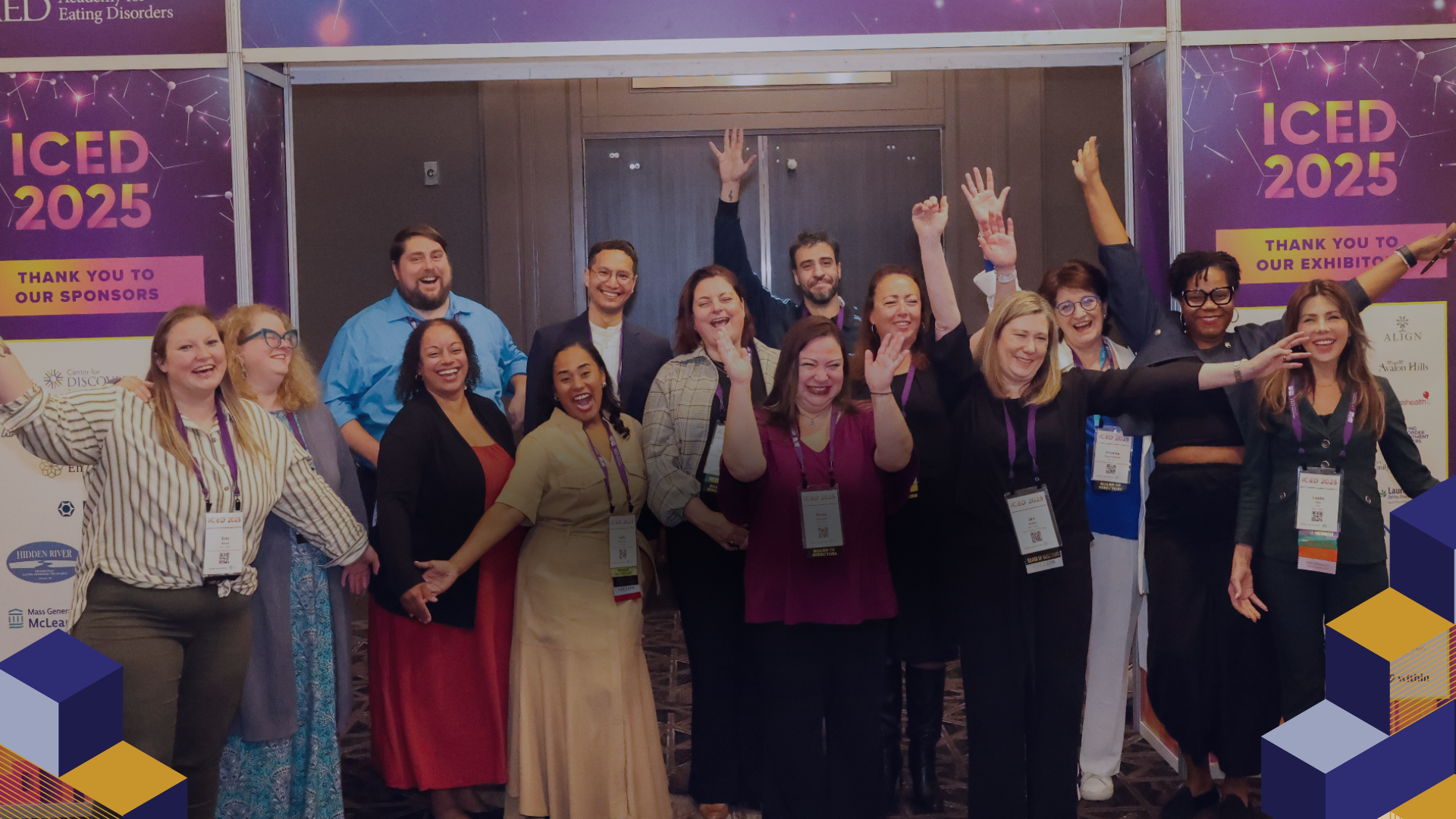
Facilitating mentoring relationships for members, at the annual International Conference on Eating Disorders (ICED), AED pairs interested AED members with more seasoned AED members (based on interests) at a “meet and greet” type social event. The aim of this event is to provide an opportunity for members to receive short-term (and potentially lasting) mentorship from experienced AED leaders. Mentors may also benefit from interaction with up-and-coming professionals by networking and facilitating optimal training and retention of promising professionals who will be the future of the AED. Sign up to become a mentor or mentee during the general ICED registration process.
Member Types & Pricing

In order to reflect the international nature of our organization’s mission and membership, AED uses a tiered dues structure with fees based the World Bank's world development indicators.
REGULAR MEMBERSHIP
- Hold an advanced degree, meeting the degree requirements in their field.
- Are trained and have experience in the field of eating disorders.
- Are involved in public or professional activities related to eating disorders organizations or the field of eating disorders.
| Zone 1 | Zone 2 | Zone 3 |
|---|---|---|
| $299 | $235 | $137 |
EXPERTS BY EXPERIENCE MEMBERSHIP
- This membership is for patients, carers, and other non-professionals who have no professional affiliation with eating disorder research or treatment.
- Eating disorder professionals are not eligible for this membership category.
| Zone 1 | Zone 2 | Zone 3 |
|---|---|---|
| $289 | $235 | $137 |
POST-BAC MEMBERSHIP
- For individuals who are between undergraduate and graduate school (currently not in a degree granting program). Restricted to a maximum of three years.
- Designed to be affordable for non-professionals.
| Zone 1 | Zone 2 | Zone 3 |
|---|---|---|
| $109 | $82 | $25 |
STUDENT MEMBERSHIP
- This category is only for members who are currently in a degree granting academic or a formalized training program (this includes, but is not limited to undergraduate/tertiary and graduate educations, postsecondary education, fellowships, internships, residencies and medical registrars).
- Members who have achieved the terminal degree in their field and are not in a formalized training program recognized in their field are not eligible for student status (this includes members who are studying for licensure in their field or working toward additional certification that is not part of a degree-granting requirement).
- The Academy reserves the right to make final determination on eligibility for this status.
| Zone 1 | Zone 2 | Zone 3 |
|---|---|---|
| $88 | $65 | $20 |
LIFETIME MEMBERSHIP
AED members who meet the following criteria (or a combination of the criteria) are eligible to be considered for lifetime membership:
- They made significant and sustained contributions to the field of eating and related disorders
- They have belonged to the Academy for a minimum of ten years OR are Founding or Charter members.
- They have reached the age of 65.
- They are no longer gainfully employed. (For the purposes of this application, "no longer gainfully employed" is defined as working 25% or less of full time, or around 10 hours, on average, per week.)
Lifetime membership is subject to board approval. Prospective lifetime members can self-nominate or be nominated by another AED member, an AED Board member, or an AED committee member. Annual dues are waived for the remainder of the individual's membership. Lifetime members may vote, serve on committees, or become Board members or officers of the organization.
Frequently Asked Questions
We know joining a new professional community can come with questions. Whether you're wondering about membership options, benefits, eligibility, dues, or what to expect after you join, we've gathered answers to some of the most frequently asked questions below.
What is the Academy for Eating Disorders (AED)?
AED consists of a multitude of members from the entire spectrum of health professionals who are personally or professionally involved with individuals with eating disorders. Read more about our mission here.
What are the Mission, Purpose, and Vision of AED?
OUR MISSION:
The mission of the AED is to advance eating disorder prevention, education, treatment, and research by expanding the global community of committed professionals.
Learn more about AED's founding history.
OUR PURPOSE:
The purpose of the Academy for Eating Disorders is:
To promote the effective treatment and care of patients with eating disorders and associated disorders;
To develop and advance initiatives for the primary and secondary prevention of eating disorders;
To provide education and dissemination of knowledge regarding eating disorders to members of the Academy, other professionals, and the general public;
To stimulate and support research in the field;
To promote multidisciplinary representation and expertise within the Academy membership and its governing structure;
To advocate for the field on behalf of patients, the public, and eating disorder professionals;
To assist in the development of guidelines for training, practice and professional conduct within the field; and;
To identify and reward outstanding achievement and/or service in the field.
OUR VISION:
A world without eating disorders through science and practice.
How is AED organized?
AED is led by a member-elected group of leaders (Executive Officers) and a Board that covers day-to-day business. There is a time-limited tenure for those individuals. View the current leadership of AED here.
There are various committees that work on issues related to AED and the eating disorders field, making proposals that are then approved by the Board and Leadership. This process ensures that the decisions are made based on broad support and in line with general goals.
AED is financed through membership fees and donations. The Finance Committee oversees budgetary and fiscal matters of the AED. It reviews the financial conduct of the AED, advises the Executive Committee on fiscal matters, oversees the implementation of budgetary priorities and assists with the preparation of the annual budget along with advising the Board concerning its approval.
What can AED do for me?
AED is a platform for health professionals who work in the eating disorders field and other individuals who are personally affected by eating disorders (e.g., family members). This involves teaching, networking, support for finding therapists around the world and discussions with other health professionals.
AED's main event is the annual International Conference on Eating Disorders (ICED), a scientific conference that spans research and education from basic science to the treating clinician and back.
AED members also have access to various online communities for discussion of a broad range of topics.
AED has a continuous education (CE) program in which professionals can earn credit toward their licensure requirements.
How do I become a member?
You can become a member by visiting Join AED page.
How can I find contact information for a member of the AED?
AED members can find contact information for other members by searching the Member Directory.
How Can i watch AED webinar recordings?
Past webinar recordings can be found in the AED Webinar Library. Want a little more help navigating? Check out the video below:
https://vimeo.com/806094232?fl=pl&fe=cm
How do I post In the online communities?
How do I get involved with the AED?
Visit the Get Involved page to learn about the variety of ways you can help further the mission of AED.
How do I join a SIG?
How do I Volunteer for one of AED's committees?
How does AED Help Therapists Advance their training?
AED provides numerous resources for professionals, regular live webinars and recordings in our webinar library, and professionals can engage in training and earn CE credit at ICED.
How do I Access AED's Continuing education content?
How Can I access my subscription to the international journal of eating disorders?
How can AED help me as a researcher?
Being a member of AED helps researchers connect and collaborate with each other and keep abreast of recent developments in eating disorders research. The annual International Conference on Eating Disorders (ICED) is attended by leading international researchers and includes presentations and discussions on the cutting edge of research in the field. Additionally, AED offers grants to support innovative and cutting edge research in the field of eating disorders. AED also allows researchers to connect with other researchers and professionals in order to recruit participants for their studies by announcing the study in its online community.
Start an Application
Ready to join AED? Start by entering your address below. We’ll use your location to determine your World Zone and direct you to the appropriate membership application and pricing for your region.
In order to reflect the international nature of our organization’s mission and membership, AED uses a tiered dues structure with fees based the
World Bank's world development indicators.
Zone One is made up of high-income countries, Zone Two of upper-middle income countries, and Zone Three of lower-middle income and low-income countries, as defined by the World Bank.
Need Help?
If you have any questions about AED membership, would like to receive a pdf application form, or need any other help joining AED, please contact info@aedweb.org.