Speakers:
 |
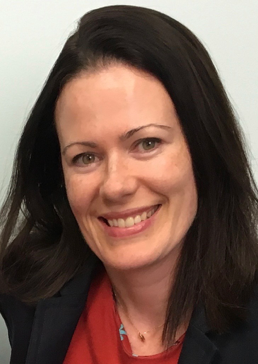 |
| Jennifer J Thomas, PhD, FAED |
Kamryn S. Eddy, PhD, FAED |
Moderator
|
|
|
Marcia Herrin, EdD, MPH, RDN, LD, FAED
|
|
Register Now
Webinar Abstract
Avoidant/Restrictive Food Intake Disorder (ARFID) was recently added to the Feeding and Eating Disorders section of DSM-5 to describe children, adolescents, and adults who cannot meet their nutritional needs, typically because of sensory sensitivity, fear of aversive consequences (e.g., choking, vomiting), and/or apparent lack of interest in eating or food. Although there is a robust literature on pediatric feeding disorders in very young children, ARFID itself is so new that there is currently no evidence-based treatment for older children, adolescents or adults.
This webinar will fill an important gap for our colleagues who are already seeing such patients in clinical practice by providing an overview of a new form of cognitive-behavioral therapy for ARFID (CBT-AR) that we have developed and refined at Massachusetts General Hospital for patients ages 10 through older adults. Early data from our efficacy studies indicate that, on average, patients who receive CBT-AR incorporate many novel foods into their regular diets, gain significant weight (if underweight), and significantly reduce ARFID symptom severity. Our webinar will cover determining patient appropriateness of CBT-AR, as well as the implementing all four stages of this flexible, modular treatment. Material will be drawn from our book Cognitive-Behavioral Therapy for Avoidant/Restrictive Food Intake Disorder: Children, Adolescents, and Adults (Cambridge University Press, 2019), cases we have seen in our clinical practice, and our ongoing research studies on the neurobiology and treatment of ARFID.
About the Speakers:
Jennifer J. Thomas, PhD, is Co-Director of the Eating Disorders Clinical and Research Program at the Massachusetts General Hospital and an Associate Professor of Psychology in the Department of Psychiatry at Harvard Medical School. Her scientific research focuses on the neurobiology and treatment of feeding and eating disorders and has been funded by the National Institute of Mental Health (NIMH) and private foundations. She is currently mPI on an NIMH-funded study on the neurobiology of avoidant/restrictive food intake disorder (ARFID). Dr. Thomas’s books Almost Anorexic: Is My or My Loved One's Relationship with Food a Problem? and Cognitive-Behavioral Therapy for Avoidant/Restrictive Food Intake Disorder: Children, Adolescents, and Adults, as well as her >120 peer-reviewed articles and book chapters, describe the many forms of disordered eating that are not fully captured by current psychiatric definitions. Along with her colleague, Dr. Kamryn Eddy, she has developed the new cognitive behavioral treatment for ARFID that will be described in this course. Dr. Thomas is also Secretary of the Academy for Eating Disorders and an Associate Editor of the International Journal of Eating Disorders.
Kamryn T. Eddy, PhD, is Co-Director of the Eating Disorders Clinical and Research Program at Massachusetts General Hospital, and Associate Professor of Psychology in the Department of Psychiatry at Harvard Medical School. Her research and clinical work focuses on low-weight eating disorders—particularly anorexia nervosa and avoidant/restrictive food intake disorder (ARFID)—in children, adolescents, and adults. She is currently mPI on two National Institute of Mental Health-funded studies investigating the neurobiology and outcome of low-weight eating disorders and has published > 120 peer-reviewed articles and book chapters on eating disorders. Further, along with her colleague, Dr. Jennifer Thomas, she has developed the new cognitive-behavioral treatment for ARFID that will be presented in this webinar and is described in their book Cognitive-Behavioral Therapy for Avoidant/Restrictive Food Intake Disorder: Children, Adolescents, and Adults.
About the Moderator:
Dietitian Marcia Herrin, who has a doctorate in nutrition education and master’s in public health nutrition, is the founder of Dartmouth College’s nationally renowned eating disorder treatment program for college students. She is a Clinical Professor at Dartmouth’s Medical School with an appointment in the Adolescent Medicine Faculty and provides training to Pediatric Residents at Children’s Hospital at Dartmouth. Besides lecturing worldwide on nutrition counseling in the treatment of eating disorders, Dr. Herrin provides programmatic and clinical supervision for eating disorder providers in the US, United Arab Emirates, Britain, Mexico, Russia, and Venezuela.
Dr. Herrin has treated eating disorder patients for over 30 years. She is the author of Nutrition Counseling in the Treatment of Eating Disorders and The Parent’s Guide to Eating Disorders. Her Rule of Threes Food Plan is widely used in the treatment of eating disorders. Marcia received her doctorate in nutrition education from Columbia University. At the University of California-Berkeley, she received her masters degree and completed a dietetic internship. Marcia was honored as a fellow in the Academy of Eating Disorders in 2013. Marcia credits much of her success with patients with eating disorders and weight issues to her own struggles with and recovery from these conditions.